
EXPLORE THIS PAGE
Tagalog-Speaking Therapist in California
Therapy in Tagalog, English, and Taglish — in person in Pasadena and online throughout California.
Sometimes it's not about whether you can speak English.
It's about whether English is the language that holds everything you want to say.
Maybe you speak Tagalog every day. Maybe you understand Tagalog but usually answer in English. Maybe your Tagalog comes out when you're talking about your parents, telling a story from childhood, making a joke, or trying to explain something that just doesn't sound quite right in English.
Maybe Taglish is simply how you naturally talk. Or maybe you don't speak much Tagalog at all—but there is something comforting about knowing your therapist understands the language, culture, family dynamics, and little things you don't always want to stop and explain.
You don't have to translate every part of yourself here. You’re welcome here—in whatever language feels like home; in whatever language feels like you.
Why Might Working With a Tagalog-Speaking Therapist Feel Different?
LANGUAGE + THERAPY
Language can hold more than words.
It can hold family. Memories. Humor. Culture. Relationships.
And sometimes, parts of ourselves that don't translate perfectly.
Research on bilingual psychotherapy suggests that language can influence how people access and communicate emotional experiences. Research with bilingual clients has also suggests that having the ability to use both languages in therapy can support expression and understanding, facilitate the therapeutic process, and strengthen the therapeutic relationship.
For Filipino Americans specifically, research has identified language as one of the cultural factors associated with patterns of mental-health help-seeking.
That doesn't mean therapy in Tagalog is automatically better than therapy in English.
It means having options can matter.
Sometimes you may want to talk about something entirely in English. Sometimes the Tagalog word comes first. Sometimes there isn't an English phrase that feels quite right. And sometimes you'll start a sentence in one language and finish it in another.
We can follow where the conversation naturally goes.

Tagalog, English & Taglish Are All Welcome
You don’t have to speak Tagalog fluently to work with a Tagalog-speaking therapist. And you definitely don’t have to prove how “Filipino” you are by how much Tagalog you know.
Maybe you grew up speaking Tagalog at home but feel more comfortable talking about certain things in English. Maybe you understand Tagalog better than you speak it. Maybe Tagalog comes out when you’re emotional, talking about family, or trying to explain something that just doesn’t sound quite right in English.
Or maybe you naturally move between both.
“Alam mo yung… wait, how do I say this?”
That’s okay. We can figure it out together.
Therapy with me can happen in Tagalog, English, or Taglish. We don’t have to choose one language and stick with it for the whole session. You can speak in whatever way feels most natural in the moment.
Sometimes that might mean most of our session is in English and one Tagalog word says exactly what you’ve been trying to explain. Other times, we might find ourselves moving back and forth without even thinking about it.
You might say:
“I know I need to set a boundary, pero parang ang sama kong anak.”
Or:
“I don’t know. Nahihiya lang talaga ako.”
We don’t need to stop the conversation to translate every word. We can pay attention to what the language means to you.
And if you prefer therapy mostly in English but like knowing that your therapist understands Tagalog, that’s welcome too.
For me, being a Tagalog-speaking therapist isn’t about requiring you to speak a certain way.
It’s about giving you more room to express yourself without having to translate every part of your experience first.
Some Things Just Feel Different in Tagalog
MEANING + NUANCE
There are words and experiences that can carry layers of meaning.
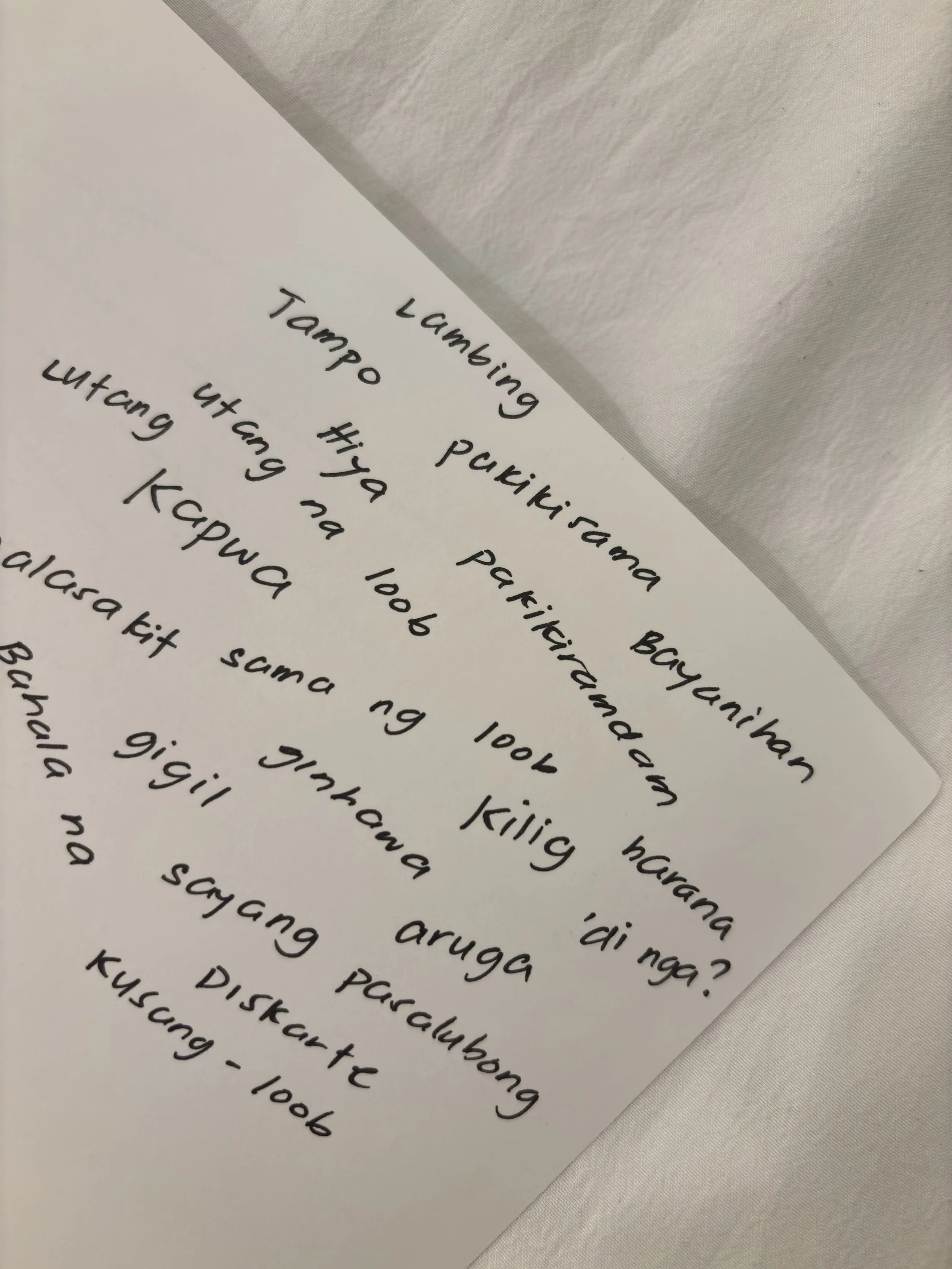
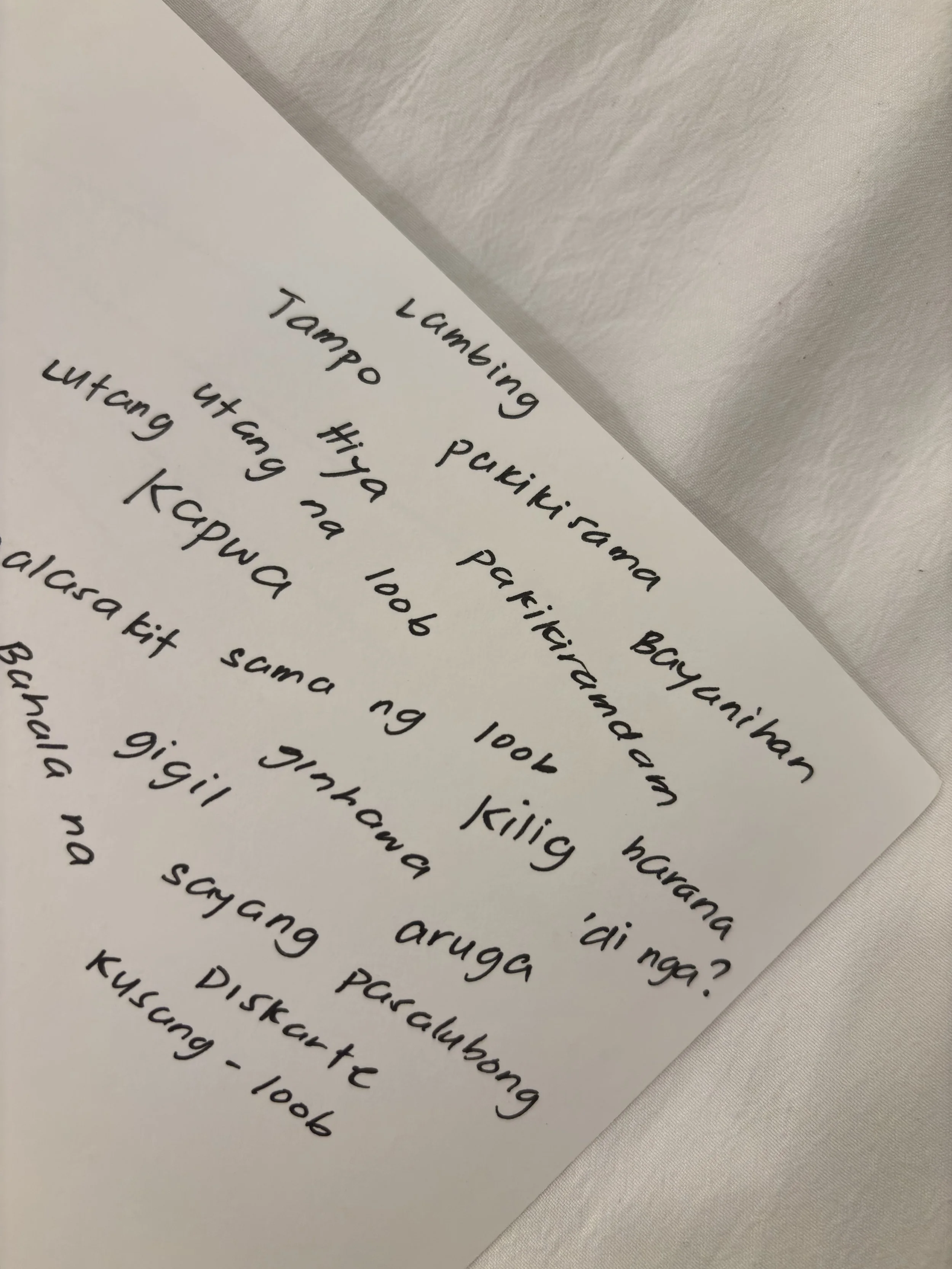
Hiya. Utang na loob. Pakikisama. Bahala na.
Even words as ordinary as anak, ate, kuya, tita, or lola can carry relationships, expectations, affection, hierarchy, history, and belonging that aren't always captured by a direct English translation.
That doesn't mean every Filipino understands these ideas in exactly the same way.
We don't.
Our relationships with Filipino culture can vary depending on our families, where we grew up, immigration experiences, generation, faith, community, language ability, and many other parts of our lives.
So I'm not going to tell you what a Filipino word or value is supposed to mean to you.
We can explore what it means in your story.
Language Can Be Connected To Emotion



Sometimes different languages seem to bring us closer to—or further away from—certain emotions.
Maybe telling a childhood story in Tagalog makes the memory feel more immediate.
Maybe talking about something painful feels easier in English because there's a little more distance.
Maybe saying "mahal kita" feels different from saying "I love you."
Maybe anger comes out in one language and sadness in another.
Switching languages can change the emotional experience of talking about memories and feelings. Some research suggests that certain experiences may be easier to access or express in one language than another.
We can notice what happens in both.
That gives us another way of understanding your experience.
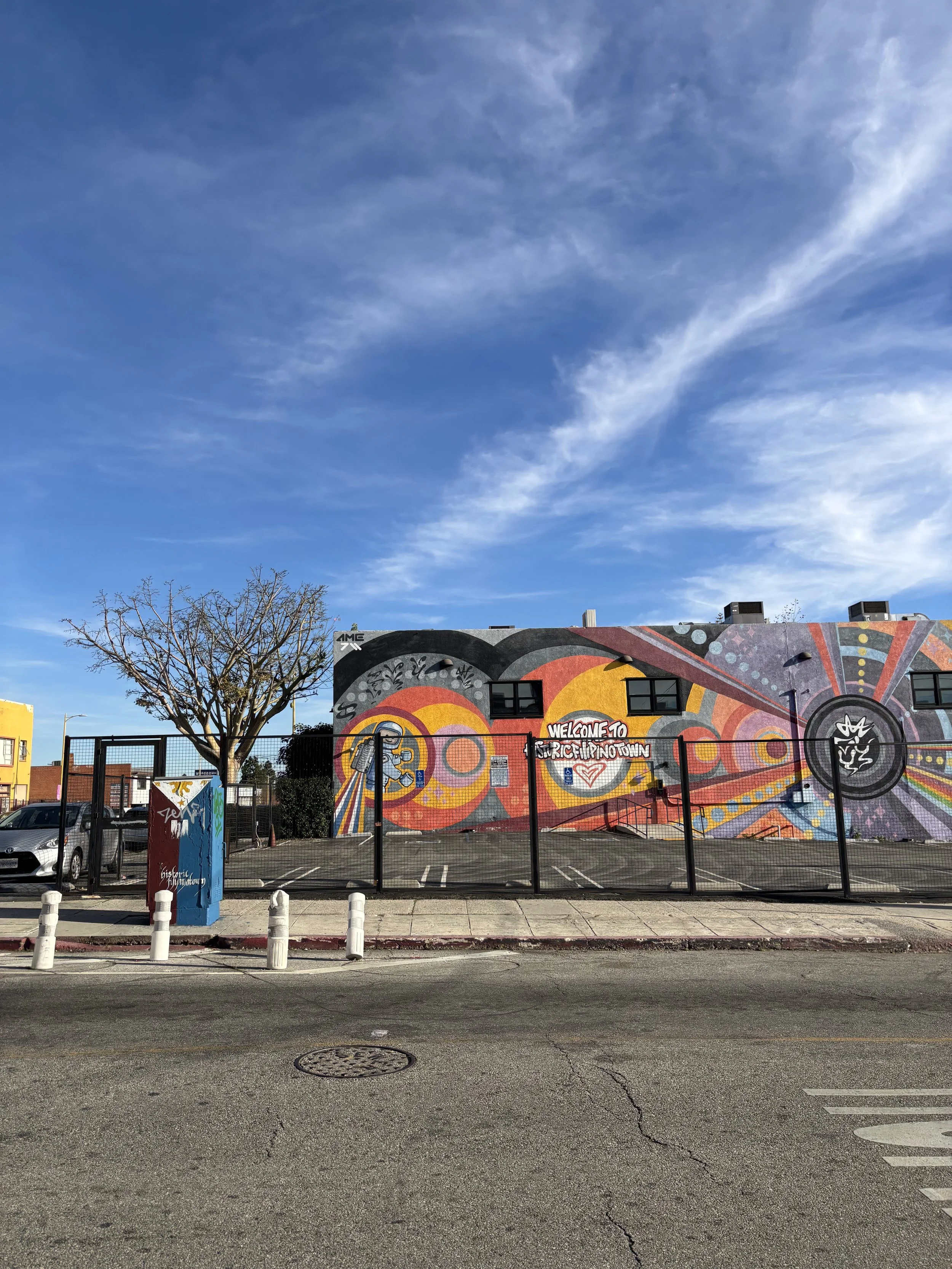
Looking for Therapy in Tagalog?
Sometimes there are things that just feel different when we say them in Tagalog. Maybe Tagalog is the language you feel most comfortable speaking. Maybe you understand Tagalog but mostly respond in English. Or maybe Taglish is simply how you naturally communicate.
In an Intercultural or Mixed-Culture Relationship?
Culture can show up in family expectations, traditions, communication, boundaries, faith, and what each partner learned a relationship should look like.
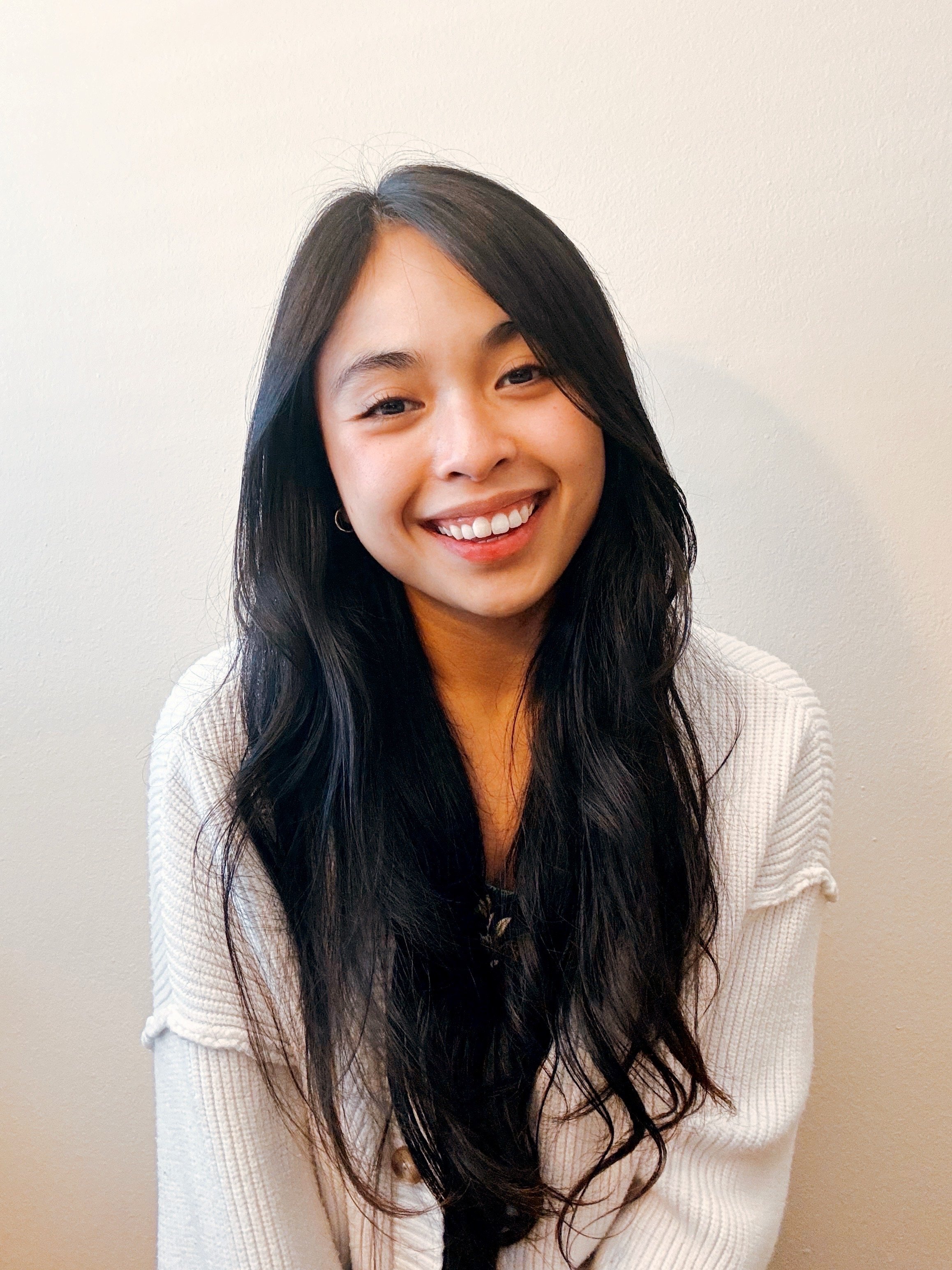
A Filipino Therapist in California
MEET KIM
Hi, I'm Kim Agramon (Agramon-Bai), AMFT, APCC. I provide in-person therapy in Pasadena and online therapy throughout California as part of Table Family Therapy.
I grew up in the Philippines and moved to the United States as an adult. So living between cultures, navigating transition and belonging, and holding joy and grief at the same time—some of these experiences are personal to me too.
I'm also married to a Chinese American, which has given me my own experience of building a relationship and family across different cultural backgrounds.
But sharing parts of your cultural experience doesn't mean I'll assume I already know your story. It would be an honor to learn your story.
I would love for therapy to be a place where you feel genuinely seen, heard, and understood. A place where your Filipino-ness doesn't have to be translated, defended, minimized, or put away. And a place where we can ask difficult questions about what you want to keep, what no longer fits, and who you're becoming.
Let's Understand the Pattern—and Practice Something Different
My approach is warm, relational, collaborative, and active.
I draw heavily from Restoration Therapy, which helps us understand what happens when painful feelings show up, what we begin telling ourselves in those moments, and how we react.
Instead of only asking: “Why do I keep doing this?,” we slow it down.
What am I feeling? What am I telling myself? What do I do when I feel that way? And what happens next?
Once we understand the pattern, we can practice something different—ways of regulating ourselves, communicating more honestly, setting healthier boundaries, and making choices that move us toward greater peace and connection.

How Filipino & Filipino American Therapy Can Help
WHAT WE CAN WORK ON
Reduce anxiety and overwhelm
Understand family expectations and guilt
Set healthier boundaries without immediately feeling like a bad child, person, partner, or family member
Work through people-pleasing
Process different forms of grief, loss, immigration, and major life transitions
Explore Filipino and Filipino American identity
Navigate living between cultures
Understand how past experiences influence present relationships
Develop greater emotional awareness
Strengthen communication
Build confidence in making your own decisions
Navigate relationships, dating, marriage, and family
Explore faith, values, or religious experiences
Develop a stronger sense of who you are and how you want to live
We’re not here to erase the values you grew up with or ask you to leave important parts of yourself behind.
Together, we can get curious about what you want to carry forward, what still feels meaningful to you, and what you may want to do differently as you build a life and relationships that feel true to who you are.
Why work with Table Family Therapy?
At Table Family Therapy, we believe there should be room for your whole story.
The parts of you that feel strong and the parts that feel stuck.
Your relationships, family, culture, identity, past experiences, and the things you're still trying to figure out—they all deserve a seat at the table.
Our approach is warm, relational, and collaborative. We don't want to simply talk about what's going wrong. Together, we can understand the patterns that keep showing up, make sense of what's underneath them, and practice new ways of responding that can lead to more connection and peace.
Kim Agramon (Agramon-Bai), AMFT, APCC, is part of the Table Family Therapy team and has a particular passion for providing culturally responsive therapy for Filipino and Filipino American clients.
Table Family Therapy offers in-person therapy in Pasadena and San Francisco and online therapy throughout California.
FAQs about Filipino & Filipino-American Therapy
-
No — The most important thing is finding a therapist you feel safe with and can trust.
For some Filipino and Filipino American clients, though, working with someone who shares some cultural context can make it easier to talk about family, identity, immigration, faith, expectations, language, or experiences that otherwise require a lot of explaining.
Sharing a culture doesn't mean I'll automatically understand everything about you.
We'll still get curious together.
-
Yes.
I'm fluent in Tagalog and English, and therapy can happen in Tagalog, English, or Taglish.
You can also switch between languages whenever it feels natural.
-
Yes.
Culture, family expectations, communication, faith, identity, and intergenerational experiences can all show up in relationships.
I also have a passion for working with intercultural and mixed-background couples.
-
Yes.
Sometimes we know intellectually that we're allowed to set a boundary or make our own decision—and still feel incredibly guilty doing it.
We can understand where that guilt comes from and practice ways of caring for yourself while staying connected to the people and values that matter to you.
-
You can still come.
Your family doesn't have to understand therapy for your experience to matter.
And we don't have to make your family the “bad guys” either.
We can understand their perspective while also making room for what you need.
If you are a teen or need family support with funding, I can work with you to talk about therapy with your parent, advocate for you, and help break down some misunderstandings/concerns about therapy.
-
Yes.
I provide online therapy throughout California and in-person therapy in Pasadena through Table Family Therapy.
-
You don't have to prove your Filipino-ness here.
Maybe you don't speak Tagalog.
Maybe you haven't been to the Philippines.
Maybe you grew up there.
Maybe you feel deeply connected to Filipino culture.
Maybe your relationship with “being Filipino” is complicated.
All of that is welcome.
You are welcome here.
-
Yes.
You don’t have to be Filipino to work with me. While I care deeply about creating a space where Filipino and Filipino-American clients can feel seen and understood, I work with people from many different backgrounds and life experiences. What matters most is finding a therapist who feels like a good fit for you and what you’re hoping to work on.
There is room for your Filipino-ness here—and room for the person you're becoming too.
In-person Filipino and Filipino American therapy is available in Pasadena, with online therapy available throughout California.
Therapy doesn't have to be a place where we separate you from your family, culture, faith, or community in order for you to grow.
We can honor where you come from.
We can understand what you've been carrying.
We can make room for the parts that hurt.
And we can practice new ways of relating to yourself and the people you love.
Resources:Gong, F., Gage, S.-J. L., & Tacata, L. A., Jr. (2003)., Helpseeking behavior among Filipino Americans: A cultural analysis of face and language.,Journal of Community Psychology, 31, 469–488.Martinez, A. B., Co, M., Lau, J., & Brown, J. S. L. (2020)., Filipino help-seeking for mental health problems and associated barriers and facilitators: A systematic review.,Social Psychiatry and Psychiatric Epidemiology, 55, 1397–1413.Tuazon, V. E., Gonzalez, E., Gutierrez, D., & Nelson, L. (2019)., Colonial mentality and mental health help-seeking of Filipino Americans., Journal of Counseling & Development, 97, 352–363.